How to check a hospital bill before you pay
Ask for the itemised bill, then go through it line by line against what actually happened during the stay. Most mistakes are ordinary ones: an extra room day, a test that was cancelled, medicines that went back to the pharmacy, a deposit that wasn't subtracted. Here's what to check, and how to ask about it calmly.
-
Ask for the itemised bill
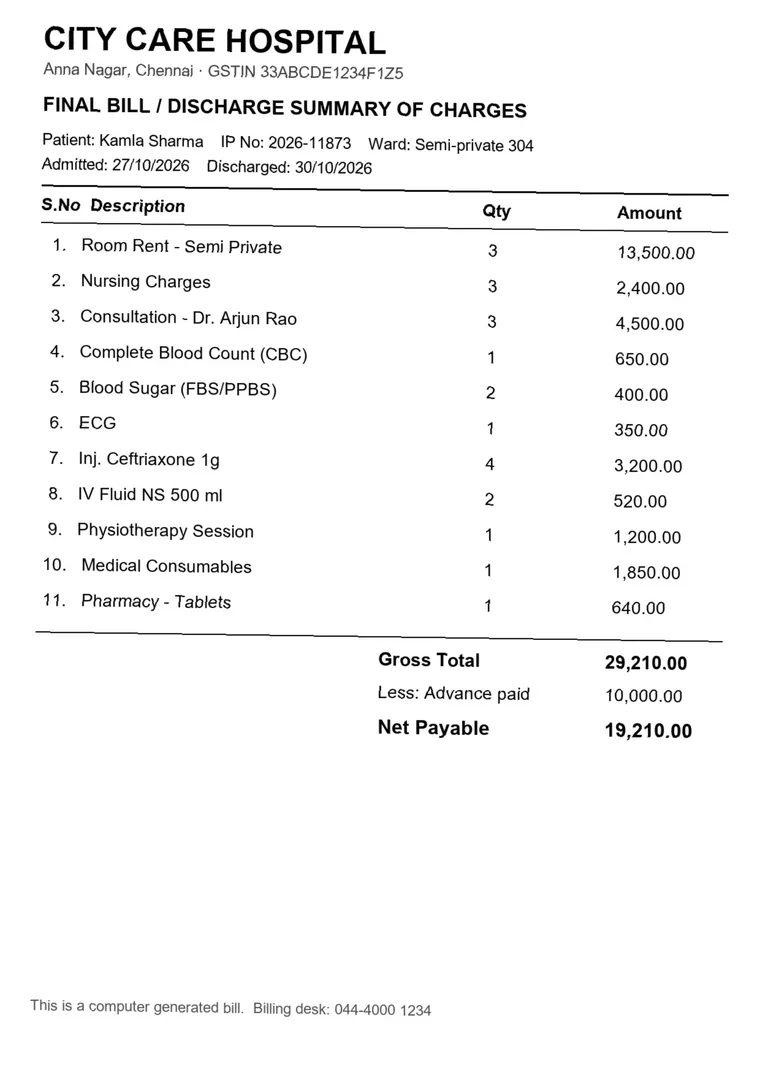
The summary bill shows totals by category. The itemised (detailed) bill lists every line: each medicine, test, visit and day. Ask the billing desk for it before you pay; hospitals give it on request.
-
Check the basics
The patient's name and hospital number, the admission and discharge dates and times, and the room or ward type. A bill for the wrong patient or the wrong room category does happen.
-
Count the room days
Room rent, nursing and some other charges are billed per day. Ask how the hospital counts the day of admission and the day of discharge, and check that days in the ICU and days in a room are billed at the right rate for the right number of days.
-
Medicines and consumables
Look for the same item twice on the same day, quantities that look too high, and unused medicines that went back to the hospital pharmacy, which should be credited. A medicine shouldn't cost more than the MRP printed on its pack.
-
Tests and procedures
Every test on the bill should have a report. A test that was ordered and then cancelled shouldn't be charged.
-
Doctor visits
Compare the number of doctor and specialist visits billed with the doctors who actually came, and on which days.
-
Packages
If the surgery or treatment was a package, ask for what it includes. Items inside the package shouldn't appear again as separate lines; things outside it, such as extra days or extra tests, may be billed on top.
-
Deposits and payments
Make sure every advance you paid is subtracted from the final amount, and that you have a receipt for each one.
-
Insurance
If insurance is paying, ask the insurance (TPA) desk before discharge which lines it won't cover, so there are no surprises. Many policies don't pay for items like gloves and masks, and if the room was above the policy's room-rent limit, some policies pay less on other charges too. Your policy document has the details.
-
Ask before you pay
Write down the lines you have questions about and take them to the billing desk. Ask for any correction as a revised bill, keep receipts for every payment, and keep the final bill with the discharge summary.
How Nabzs helps
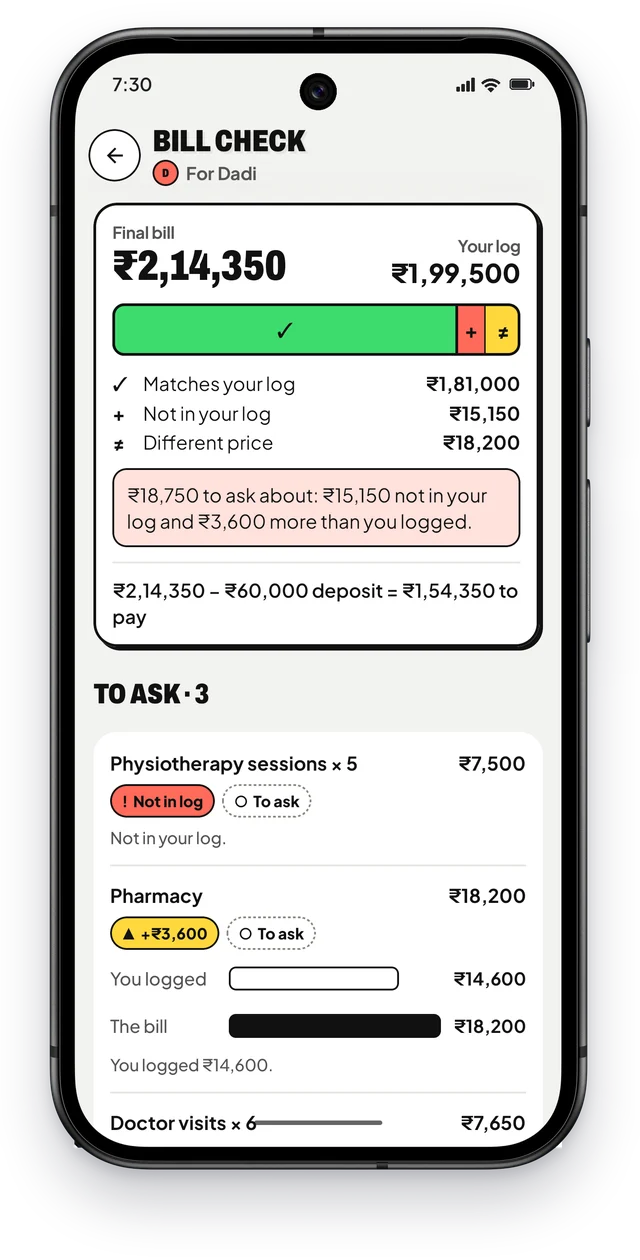
During a hospital stay, Nabzs keeps a log: the deposit, what's given and what's spent each day, and that person's home doses and reminders pause until they're home.
When the final bill comes, take a photo. Nabzs reads each line with AI and matches it against your log: ✓ matches, + not in your log, ≠ a different price, with one total to ask about. You check it before anything is saved. See how Nabzs works.